Introduction
Prior authorization is a common process used by insurance companies to determine whether certain medical services, treatments, medications, or procedures are medically necessary before they are approved for coverage.
Healthcare providers often must obtain approval from the insurance company before services can be performed. Without authorization, claims may deny and providers may not receive reimbursement for services provided.
Prior authorization plays a major role in healthcare billing, Revenue Cycle Management (RCM), and insurance claim processing.
In this beginner’s guide, we’ll explain what prior authorization is, how the process works, why it is important, and common challenges healthcare organizations face.
What Is Prior Authorization?
Prior authorization, also called preauthorization or precertification, is a requirement from insurance companies that providers receive approval before certain healthcare services are performed.
Insurance companies use prior authorization to:
- Control healthcare costs
- Review medical necessity
- Ensure services meet payer guidelines
- Prevent unnecessary treatments
If authorization is approved, the insurance company agrees the service may be covered under the patient’s health plan.
However, approval does not always guarantee payment because claims must still meet billing and coverage requirements.
Services That Commonly Require Prior Authorization
Many healthcare services may require authorization before treatment.
Examples include:
- Imaging services (MRI, CT scans, PET scans)
- Chemotherapy treatments
- Specialty medications
- Surgical procedures
- Physical therapy
- Durable medical equipment (DME)
- Outpatient procedures
- Sleep studies
Authorization requirements vary by insurance company and health plan.
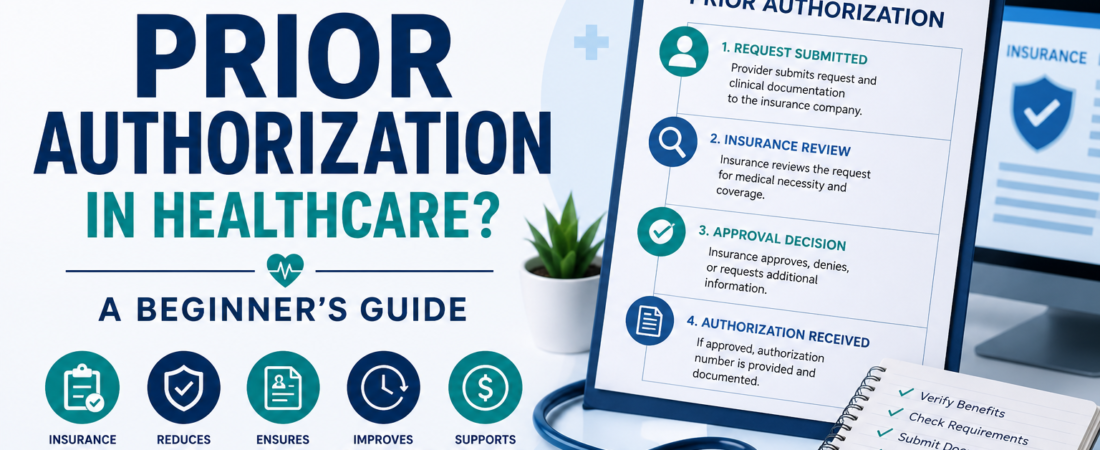
How the Prior Authorization Process Works
1. Provider Orders the Service
The physician determines the patient needs a specific treatment, medication, or procedure.
2. Insurance Verification
Healthcare staff verify the patient’s insurance benefits and determine whether prior authorization is required.
3. Authorization Request Submission
The provider submits clinical documentation and medical records to the insurance company for review.
This may include:
- Diagnosis information
- Physician notes
- Treatment plans
- Medical necessity documentation
- Procedure details
4. Insurance Review Process
The insurance company reviews the request to determine whether the service meets medical necessity guidelines.
Some requests may:
- Approve immediately
- Require additional information
- Pend for medical review
- Deny based on payer guidelines
5. Authorization Decision
The insurance company sends an approval or denial decision.
If approved, the authorization number is documented and attached to the patient account and future claim submission.
Why Prior Authorization Is Important
Prior authorization helps insurance companies manage healthcare costs and ensure services are medically necessary.
For healthcare providers, obtaining authorization is important because it helps:
- Reduce claim denials
- Improve reimbursement accuracy
- Prevent payment delays
- Improve billing compliance
- Reduce patient billing issues
Missing authorizations can lead to significant financial losses for healthcare organizations.
Common Prior Authorization Challenges
Healthcare organizations often face several authorization-related challenges.
Common issues include:
- Long approval turnaround times
- Complex insurance requirements
- Missing clinical documentation
- High administrative workload
- Frequent payer policy changes
- Authorization denials
- Communication delays between providers and insurance companies
Prior authorization is one of the most time-consuming parts of the healthcare revenue cycle.
Common Reasons Prior Authorizations Are Denied
Insurance companies may deny authorization requests for several reasons, including:
- Lack of medical necessity
- Incomplete documentation
- Incorrect diagnosis information
- Services not covered under the patient’s plan
- Missing clinical records
- Failure to follow payer guidelines
Denied authorizations may require appeals or peer-to-peer reviews.
Tips to Improve Prior Authorization Success
Healthcare organizations can improve authorization approval rates by:
- Verifying insurance requirements early
- Submitting complete documentation
- Tracking authorization status regularly
- Training authorization staff
- Monitoring payer policy updates
- Using authorization tracking software
- Communicating closely with providers and patients
Strong authorization workflows help reduce denials and improve Revenue Cycle Management performance.
How Prior Authorization Impacts Revenue Cycle Management
Prior authorization directly impacts healthcare reimbursement and financial performance.
Missing or incorrect authorizations may result in:
- Insurance claim denials
- Delayed payments
- Increased accounts receivable balances
- Lost revenue
- Additional administrative work
Effective authorization management helps healthcare organizations improve operational efficiency and financial stability.
Conclusion
Prior authorization is an important part of healthcare billing and insurance claim processing.
Insurance companies use prior authorization to review medical necessity before certain healthcare services are performed. While the process can be complex, proper authorization management helps reduce denials, improve reimbursement, and strengthen Revenue Cycle Management performance.
Understanding how prior authorization works helps healthcare providers improve billing accuracy, prevent payment delays, and support better financial outcomes for healthcare organizations.