
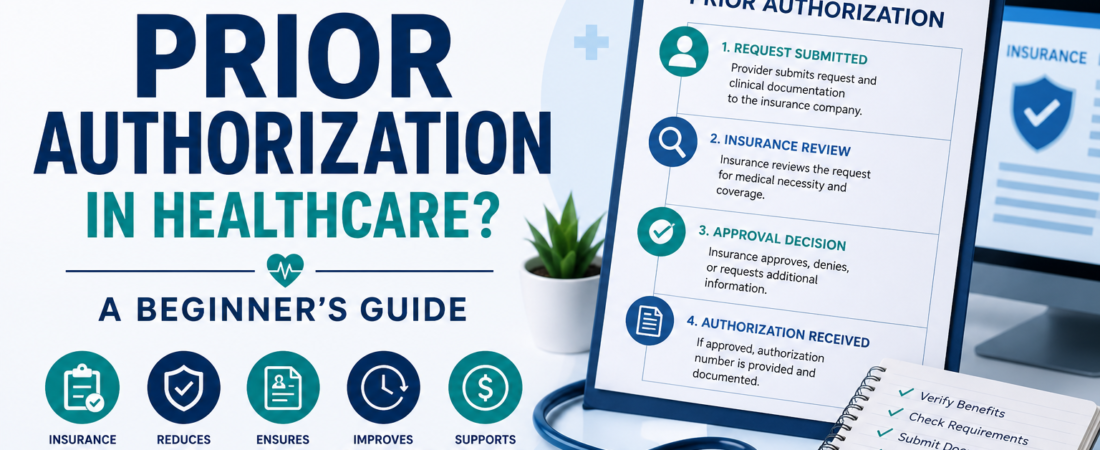
What Is Prior Authorization?
Prior authorization is a healthcare insurance requirement that requires providers to obtain approval from an insurance company before certain medical services, procedures, medications, imaging studies, or treatments can be performed. Insurance companies use prior authorization as a cost-control and medical review process to determine whether a service meets coverage guidelines and medical necessity requirements before payment is approved.
Within the healthcare industry, prior authorization has become one of the most significant administrative responsibilities impacting providers, billing departments, revenue cycle teams, and patients. Without proper authorization approval, healthcare organizations may face claim denials, delayed reimbursements, increased administrative workload, and interruptions in patient care.
Insurance companies commonly require prior authorization for high-cost medications, specialty treatments, advanced imaging services, chemotherapy drugs, surgeries, durable medical equipment, and certain outpatient procedures. Requirements vary significantly between insurance payers, making authorization management increasingly complex for healthcare organizations.
The prior authorization process typically involves submitting clinical documentation, physician notes, diagnosis information, treatment plans, and medical necessity justification to the insurance company for review. Insurance payers then evaluate the request based on policy guidelines, coverage rules, and clinical criteria before approving or denying the service.
Because prior authorization directly impacts reimbursement and patient scheduling, healthcare organizations often dedicate entire authorization teams to managing insurance approvals, communicating with providers, and ensuring services are authorized correctly before treatment is performed.
Why Prior Authorization Is Important
Prior authorization plays an important role in healthcare reimbursement and insurance compliance. Insurance companies use authorization requirements to review whether services are medically necessary, cost-effective, and consistent with payer policy guidelines before approving coverage.
For healthcare providers, obtaining authorization approval before services are performed helps reduce claim denials and reimbursement delays. Failure to obtain prior authorization correctly may result in insurance companies refusing payment entirely, leaving healthcare organizations responsible for unpaid balances or requiring lengthy appeal processes.
Prior authorization also impacts patient care coordination and scheduling. Delays in authorization approvals can postpone treatments, procedures, imaging studies, and medication administration, which may affect both patient outcomes and operational efficiency within healthcare organizations.
Healthcare providers, medical billers, and revenue cycle teams must work closely together to ensure authorization requirements are identified early, documentation is submitted accurately, and payer guidelines are followed correctly to minimize financial and operational disruptions.
Common Challenges With Prior Authorization
Despite its importance within healthcare reimbursement processes, prior authorization remains one of the most time-consuming and administratively challenging components of Revenue Cycle Management. Healthcare organizations often face ongoing difficulties managing payer requirements, authorization timelines, documentation requests, and communication delays.
One of the most common challenges involves inconsistent insurance payer guidelines. Authorization requirements vary between insurance companies and may frequently change based on policy updates, medical necessity criteria, or contract revisions. Services that require authorization under one insurance plan may not require authorization under another, creating additional complexity for providers and billing teams.
Incomplete documentation is another major contributor to authorization denials and delays. Insurance companies often require detailed clinical records, physician documentation, treatment plans, diagnostic results, and medical necessity justification before approving services. Missing or insufficient documentation can result in authorization denials or requests for additional information.
Authorization timing also creates operational challenges for healthcare providers. Delayed approvals may postpone patient scheduling, treatments, surgeries, imaging procedures, or specialty medication administration. In some cases, services may need to be rescheduled entirely while providers wait for insurance determinations.
Healthcare organizations also face staffing and workload challenges related to authorization management. Many organizations maintain dedicated authorization teams responsible for reviewing payer guidelines, obtaining approvals, tracking pending requests, communicating with providers, and documenting authorization information accurately within billing systems.
Increased administrative burden, payer portal management, lengthy hold times with insurance companies, and frequent policy changes continue to make prior authorization one of the most resource-intensive processes within healthcare operations.
Strategies to Improve Prior Authorization Workflows
Healthcare organizations continue to invest heavily in process improvement strategies designed to reduce prior authorization delays, improve operational efficiency, and strengthen reimbursement outcomes. Effective authorization management requires strong communication, accurate documentation, technology integration, and proactive workflow planning across multiple departments.
One of the most effective strategies for improving authorization workflows is identifying authorization requirements as early as possible during patient scheduling and insurance verification. Early identification allows authorization teams additional time to gather clinical documentation, communicate with providers, and submit requests before scheduled services occur.
Technology also plays a significant role in streamlining authorization processes. Many healthcare organizations utilize electronic authorization portals, automated payer systems, and integrated practice management software to track authorization status, monitor pending requests, and reduce manual administrative tasks. Automation helps improve visibility while reducing delays associated with traditional paper-based or phone-based processes.
Standardized documentation practices are another important component of successful authorization management. Insurance companies often require detailed physician documentation that clearly supports medical necessity and payer coverage criteria. Organizations that implement structured documentation workflows and provider education programs are often better positioned to reduce authorization denials and resubmission requests.
Communication between clinical teams, providers, authorization specialists, and billing departments is equally important. Coordinated workflows help ensure authorization approvals are obtained accurately, documented properly, and attached to claims before billing submission occurs.
As healthcare insurance requirements continue to evolve, organizations that prioritize authorization workflow optimization are better equipped to improve patient scheduling efficiency, reduce claim denials, strengthen reimbursement performance, and support a more consistent patient care experience.
Final Thoughts
Prior authorization continues to play a major role in healthcare reimbursement, insurance compliance, and patient care coordination. While insurance companies use authorization requirements to manage medical necessity and healthcare costs, the process often creates significant administrative responsibilities for providers, billing teams, and revenue cycle departments.
Successfully managing prior authorization requires accurate documentation, proactive communication, strong workflow processes, and a clear understanding of payer-specific requirements. Healthcare organizations that invest in authorization management strategies are often better positioned to reduce claim denials, improve reimbursement efficiency, and minimize treatment delays for patients.
As healthcare regulations and insurance policies continue to evolve, prior authorization will remain a critical component of Revenue Cycle Management. Organizations that prioritize process improvement, staff education, and technology integration can strengthen operational performance while supporting a more efficient patient financial and clinical experience.
Understanding how prior authorization works is essential for healthcare professionals, medical billers, coders, administrators, and anyone involved in healthcare reimbursement operations. Effective authorization management not only supports financial stability but also contributes to improved patient access to medically necessary care.