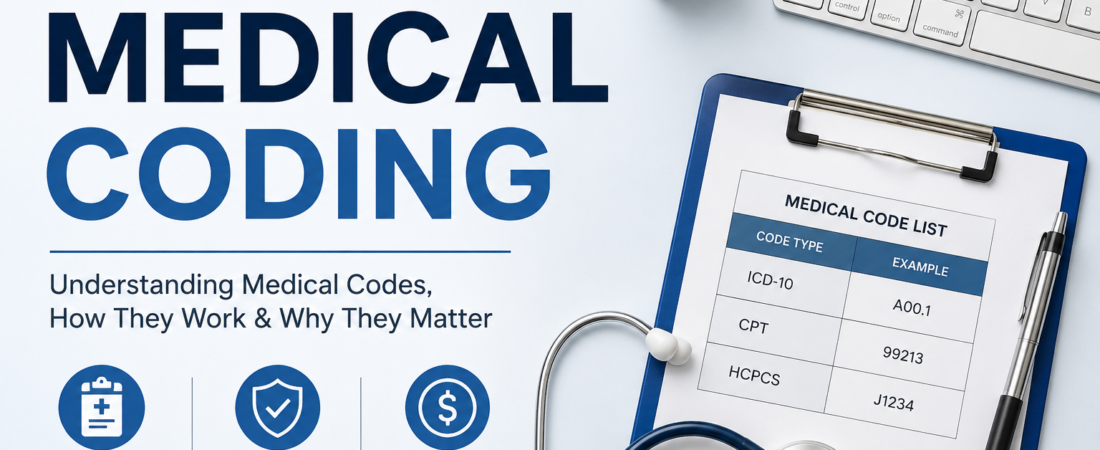
Medical coding is an essential part of the healthcare industry that helps providers communicate patient diagnoses, treatments, and procedures using standardized codes.
These codes are used by hospitals, doctors, insurance companies, and healthcare organizations to ensure medical services are documented correctly and billed accurately.
Without medical coding, healthcare providers would struggle to process insurance claims, maintain patient records, and receive reimbursement for services provided.
In this beginner’s guide, we’ll explain what medical coding is, how it works, the different types of medical codes, and why it plays such an important role in healthcare.
What Does a Medical Coder Do?
Medical coders review patient medical records and translate healthcare services, diagnoses, treatments, and procedures into standardized medical codes.
These codes are used for insurance claims, medical billing, patient documentation, and healthcare reporting.
Medical coders work closely with physicians, medical billers, insurance companies, and healthcare facilities to ensure coding accuracy and compliance with healthcare regulations.
Why Medical Coding Is Important
Medical coding plays a critical role in the healthcare revenue cycle because it helps providers receive proper reimbursement from insurance companies.
Accurate coding reduces claim denials, prevents billing errors, improves patient record accuracy, and helps healthcare organizations maintain compliance with federal regulations.
Incorrect coding can lead to denied claims, delayed payments, audits, and compliance issues.
Types of Medical Codes
There are several different types of medical codes used in healthcare. Each code system serves a different purpose.
- ICD-10 Codes
ICD-10 codes are diagnosis codes used to describe diseases, conditions, and patient symptoms.
Example:
E11.9 – Type 2 diabetes mellitus without complications
- CPT Codes
CPT codes describe medical procedures and services performed by healthcare providers.
Example:
99213 – Office or outpatient visit
- HCPCS Codes
HCPCS codes are used for medical equipment, supplies, medications, and certain healthcare services not included in CPT coding.
Example:
J1642 – Injection, heparin flush
How Medical Coding Works
Medical coding follows a detailed process to ensure healthcare services are translated into accurate medical codes for billing and documentation.
- Review Medical Documentation
The medical coder reviews physician notes, medical records, lab results, and procedure documentation. - Identify Diagnoses and Procedures
The coder identifies the patient’s diagnoses, treatments, and services performed during the visit. - Assign Medical Codes
The coder assigns ICD-10, CPT, and HCPCS codes based on official coding guidelines. - Verify Accuracy
The coder checks documentation and coding accuracy to prevent claim denials and compliance issues. - Submit Codes for Billing
The finalized codes are sent to the medical billing department for claim submission. - Compliance and Auditing
Medical coders help healthcare organizations maintain compliance with healthcare regulations and coding standards.
Challenges in Medical Coding
Medical coding can be challenging because coders must follow strict guidelines and ensure all documentation is accurate and complete.
Some common challenges in medical coding include:
- Incomplete Documentation – Missing physician notes or unclear medical records can make coding difficult.
- Coding Errors – Incorrect coding can lead to denied insurance claims and delayed payments.
- Constant Updates – ICD-10, CPT, and HCPCS codes are updated regularly, requiring coders to stay informed.
- Compliance Requirements – Medical coders must follow federal regulations and healthcare compliance standards.
- Insurance Guidelines – Different insurance companies may have different coding and billing requirements.
Conclusion
Medical coding is a vital part of the healthcare industry that helps healthcare providers accurately document services and receive proper reimbursement.
By translating medical diagnoses, treatments, and procedures into standardized codes, medical coders support insurance claims, healthcare reporting, and patient record accuracy.
As healthcare continues to evolve, skilled medical coders remain an essential part of the healthcare revenue cycle and compliance process.