
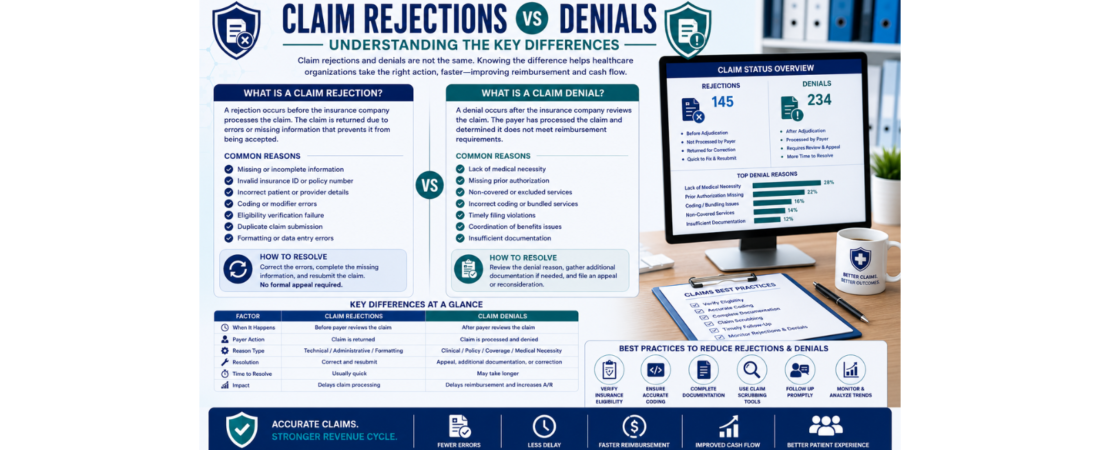
Difference Between Claim Rejections and Denials
Healthcare claim rejections and claim denials are two of the most common reimbursement issues within the Revenue Cycle Management process. Although these terms are often used interchangeably, they represent two very different claim outcomes during insurance claims processing.
A claim rejection occurs before the insurance company fully processes or adjudicates the claim. Rejected claims are typically returned to the healthcare provider due to missing information, formatting errors, invalid coding, eligibility issues, or claim submission problems that prevent the payer from accepting the claim into their processing system.
A claim denial occurs after the insurance company receives and reviews the claim during adjudication. Denied claims indicate the payer determined the services do not meet reimbursement requirements based on coverage guidelines, medical necessity, authorization requirements, coding rules, policy limitations, or other payer-specific criteria.
Understanding the difference between claim rejections and denials is extremely important because each issue requires a different correction and resolution process. Rejected claims are often corrected and resubmitted quickly, while denied claims may require appeals, additional documentation, coding corrections, or payer follow-up before reimbursement can be obtained.
Healthcare organizations closely monitor rejection and denial trends because both directly impact reimbursement performance, operational efficiency, cash flow, and patient billing accuracy throughout the Revenue Cycle Management process.
What Is a Claim Rejection?
A claim rejection occurs when a healthcare claim fails initial claim validation checks and is returned before the insurance company fully processes or adjudicates the claim. Rejections typically involve technical, administrative, or formatting errors that prevent the payer system from accepting the claim for review.
Common rejection reasons may include missing patient information, invalid insurance policy numbers, incorrect payer IDs, missing modifiers, invalid diagnosis codes, formatting inconsistencies, duplicate claim submissions, or eligibility verification failures.
Because rejected claims are not fully processed by the insurance company, they generally do not require a formal appeal process. Healthcare billing teams can usually correct the identified errors and resubmit the claim for processing relatively quickly once the issues are resolved.
Claim rejections may occur through clearinghouses, payer systems, or electronic claim editing software before claims enter the adjudication stage. Healthcare organizations often utilize claim scrubbing tools, billing edits, and quality review workflows to identify rejection risks before claims are submitted to insurance companies.
Reducing claim rejection rates is important because rejected claims delay reimbursement, increase administrative workload, and negatively impact clean claim performance metrics within healthcare Revenue Cycle operations.
What Is a Claim Denial?
A claim denial occurs after the insurance company receives and reviews the claim during adjudication. Denied claims indicate the payer determined the claim does not meet reimbursement requirements based on coverage policies, coding guidelines, authorization requirements, medical necessity standards, or payer contract rules.
Common denial reasons may include lack of medical necessity, missing prior authorization, non-covered services, incorrect coding combinations, timely filing violations, eligibility terminations, coordination of benefits issues, or incomplete supporting documentation.
Unlike rejected claims, denied claims often require more extensive follow-up efforts before reimbursement can be obtained. Healthcare organizations may need to correct coding issues, obtain additional documentation, submit reconsiderations, file formal appeals, or communicate directly with insurance representatives to resolve denied claims successfully.
Denial management has become one of the most important functions within Revenue Cycle Management because denial volumes significantly impact reimbursement timelines, operational costs, cash flow performance, and patient financial responsibility balances.
Healthcare organizations frequently monitor denial trends, payer patterns, denial codes, root causes, and appeal outcomes to identify workflow improvement opportunities and reduce reimbursement risk across billing operations.
Key Differences Between Rejections and Denials
Although claim rejections and denials both impact healthcare reimbursement, the primary difference involves where the issue occurs within the claims processing cycle. Rejected claims fail before adjudication, while denied claims occur after payer review and adjudication are completed.
Rejected claims are generally easier and faster to resolve because they often involve technical or administrative corrections such as missing information, formatting issues, or coding inconsistencies. Once corrected, rejected claims are typically resubmitted electronically for processing.
Denied claims often require additional investigation and follow-up because the insurance company has already reviewed the claim and determined reimbursement requirements were not met. Denied claims may involve medical necessity concerns, authorization issues, coverage limitations, or documentation deficiencies that require appeals or payer communication.
Healthcare organizations that maintain strong insurance verification processes, coding accuracy, documentation quality, claim scrubbing workflows, and denial management programs are often more successful in reducing both claim rejection and denial volumes.
Understanding these differences helps healthcare billing teams improve claims management strategies, strengthen reimbursement performance, and reduce financial risk throughout the Revenue Cycle process.
Final Thoughts
Understanding the difference between healthcare claim rejections and denials is extremely important for healthcare organizations involved in Revenue Cycle Management operations. Both issues impact reimbursement performance, cash flow, operational efficiency, and patient financial accuracy, but each requires different correction and resolution strategies.
Healthcare organizations that prioritize coding accuracy, insurance verification, documentation quality, claim review processes, and denial prevention strategies are often better positioned to reduce reimbursement delays and improve clean claim performance.
As healthcare billing regulations continue evolving, strong claims management workflows remain essential for reducing rejection and denial rates while supporting financial stability and operational success across healthcare organizations.